Buttons Message
Explains WhatsApp button messages. Useful for interactive choices, guided responses, approvals, and quick user actions.
Basic Usage
Parameters
Everything inside platforms.meta_whatsapp should be considered parameters for this notification. There are top level
parameters that describe the message type and other general message behaviors, and then there are nested parameters
dependent on the message type.
Only nested parameters for message_type: buttons is explained here, for all top level parameters, see the top level
Whatsapp documentation
message_type required string
Indicates the type of message that is going to be sent. This also will determine what the contents of the params object should be.
Available message types are:
params required object
Contains the parameters for the message and will depend on the message_type setting.
See the message_type specific documentation above for the message type specific parameters.
Show child attributes
buttons required object
Object is required if the message_type is buttons. This object should change to match what message_type is set to.
Show child attributes
body required string
The body text displayed above the buttons.
buttons required array
Contains the button objects displayed below the message body. Meta allows a maximum of three reply buttons in a button message. If the user needs to choose from more than three options, use a list message instead.
Show child attributes
id required string
The id is the value that will be available in the incoming response data when the user clicks the button.
The id needs to be a string and can be up to 20 characters long. Spaces in the id value will result in a Meta error,
so use a unique snake_case value.
title required string
The title is the text that will be displayed on the button.
The title needs to be a string and can be up to 20 characters long.
Button object example
Result
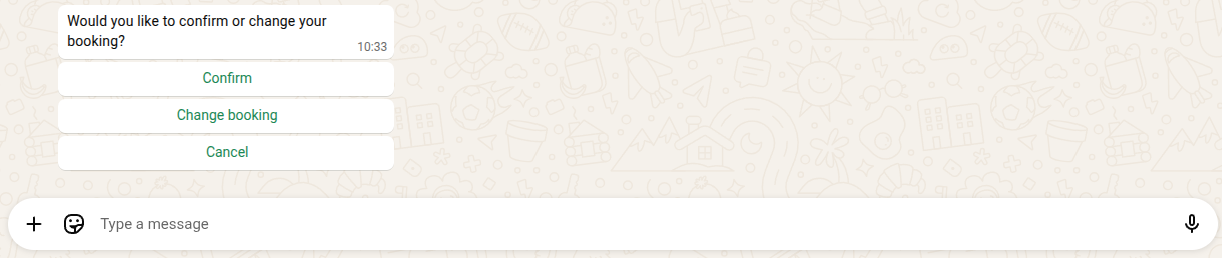
The recipient sees the body text with up to three buttons beneath it. When they select a button, WhatsApp sends the
button title as their visible reply and makes the corresponding id available in the incoming response data. Use this
stable id, rather than the user-facing title, when deciding which action or workflow should run next.

Examples
Three-way confirmation
This example uses the maximum of three buttons allowed:
Using substitution in the message
The body can include substituted data while the button IDs remain predictable for downstream routing:
