Overview
Outlines the basic concepts of Stubber at a high level
Stubber is a platform for designing and running AI-assisted processes. In Stubber, you define a process as a Template, using states and actions, and each live execution of that process runs as a Stub.
What is a Template in Stubber
In Stubber, a Template is the definition of a process. It is a visual representation of how something gets done, step by step.
A Template is made up of a few key concepts:
Start and End of a Template
- Every Template has a clear beginning and end.
- The start defines how a Stub enters the process.
- The end represents the completion of a defined outcome.
Actions and States
A Template is built from states and actions, which define its structure and behavior.
States
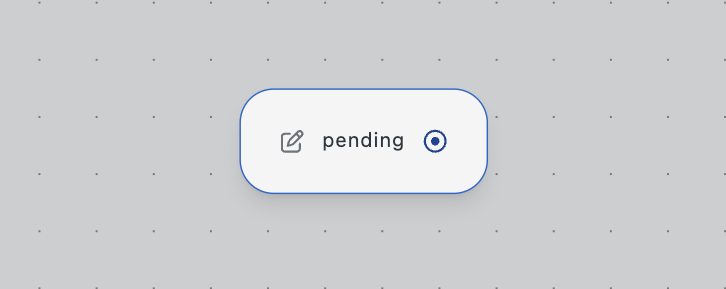
States represent the conditions or stages a Stub can be in during a process.
In the Stubber Editor, a state looks like this:
Actions
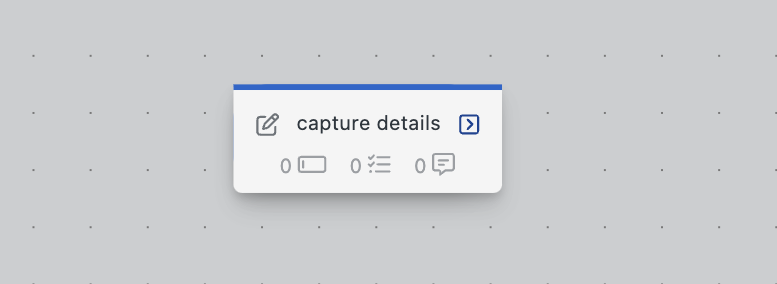
Actions are the transitions or operations that move a Stub forward or perform work during execution.
In the Stubber Editor, an action looks like this:
For more details, see:
Stubs in Stubber
A Stub is a single runtime instance of a Template. You can think of it as one execution of the process defined by the Template.
Key Details About Stubs
- A Stub can only be in one state at any given time.
- A Stub can only enter states defined in its Template (or inherited from other Templates).
- Stubs transition between states to guide users and AI systems toward completion.
- Stubs operate as Finite State Machines (FSMs) — structured, predictable, and fully defined.
For more on stubs, see Stubs.
What Stubber Is Not
Stubber is not just a traditional workflow tool or a simple task list. It is a flexible framework for defining, structuring, and running AI-assisted processes.